SketchUp
Students Design
Competition 2026
“Inherited Futures”
16 - 18 September 2026
Bali, Indonesia


About
“Inherited Futures”
Every building inherits a history and shapes our cities with a complex architectural legacy. Traditional structures hold cultural memory and climate wisdom but risk being lost or preserved as relics. Conversely, decades of rapid, generic construction produced buildings that ignored local climate and identity.
Regardless of building status, the embodied carbon locked within their walls represents an environmental cost already paid. Replacing them with yet another building solves nothing and learns nothing.
This competition challenges students to investigate the existing structure—its climate knowledge, cultural memory, triumphs, failures, and flaws—treating it as the raw material for invention. The process begins with rigorous archaeology of what is present, followed by invention discovered from within, not imposed from outside. The outcome is not restoration, but a future rooted in this specific place, this culture, this climate, and inheritance.
Check Us Out
follow our IG SSDC.2026Meet The Judges

Christopher
Brashar
Sketchup GlobalTrainings Manager
Denver, USA
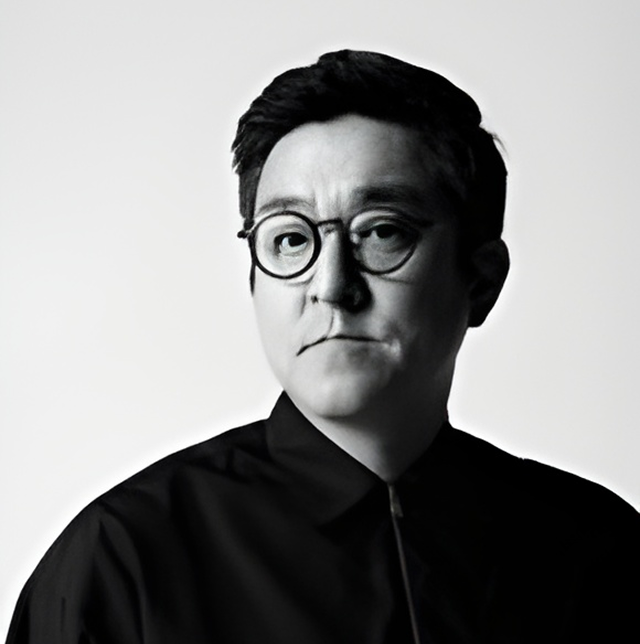
Yang
Soo In
Design Director, Lifethings Inc., ex Adjunct Assistant Professor, Columbia University, GSAPP, NY, USA
Seoul, South Korea

Kevin
Hui
Architecture educator, content creator and co-founder of Archmarathon, a public-facing architectural literacy platform with a combined following of over 880,000
Melbourne, Australia
Overview of Design Competition
Every building inherits a history and shapes our cities with a complex architectural legacy. Traditional structures hold cultural memory and climate wisdom but risk being lost or preserved as relics. Conversely, decades of rapid, generic construction produced buildings that ignored local climate and identity.
Regardless of building status, the embodied carbon locked within their walls represents an environmental cost already paid. Replacing them with yet another building solves nothing and learns nothing.
This competition challenges students to investigate the existing structure—its climate knowledge, cultural memory, triumphs, failures, and flaws—treating it as the raw material for invention. The process begins with rigorous archaeology of what is present, followed by invention discovered from within, not imposed from outside. The outcome is not restoration, but a future rooted in this specific place, this culture, this climate, and inheritance.
The Design Brief
- Students must select an existing building in their city or country and transform it with a considered architectural addition.
- Students are encouraged to define their own program for the building, the program must act as a compelling catalyst for the existing structure and be clearly justified in the design statement “ A Community Cultural Centre “ can be baseline as starting point, but unexpected typologies are encouraged
- Students may choose existing building from the full spectrum of built environments
- Option 1 : Heritage/Historical Sites: Recognized landmarks or traditional structures to explore embedded climate wisdom and cultural memory.
- Option 2 : Generic/Everyday Structures: Anonymous office blocks, disused warehouses, or utilitarian builds to correct environmental disconnect and radically redefine purpose.
- Criteria for Existing Building:
- It need not be architecturally significant or celebrated (can be a protected landmark or an ordinary, imperfect shell)
- It must be real and occupy a specific place.
- Its history (monumental or mundane, wise or flawed) must reveal something about the place’s culture and climate.

The Challenges
- Approach: The addition must not erase the existing building; it should respond to, learn from, and, if necessary, correct it.
- Scale: The addition’s floor area must be between 30% and 75% of the existing building’s gross floor area. All existing floor area calculations must be clearly documented and submitted.
- Structure: The existing structure must remain legible in the final design. Partial demolition is permitted only where it can be demonstrated as essential to the architectural argument, and must be clearly justified in the design statement.
- Climate: The addition must demonstrate a considered response to the climate of the chosen site, including orientation, shading, ventilation, and material selection. Students are strongly encouraged to use SketchUp PreDesign at the outset of the project to analyse historical climate data and identify appropriate design strategies. PreDesign is included with SketchUp Studio EDU version and requires no additional setup or cost.
- The Program
Students entirely welcome to redefine the building’s purpose—whether they propose a community cultural centre, a commercial space, a community spa, or an entirely new typology.
Whatever direction students choose, they must clearly justify their programmatic decisions and typological shifts in their design statement.
- Software Constraints :
A native SketchUp model file must be submitted. Students may use any additional software for rendering, drawing, and presentation, but the SketchUp model is non-negotiable and will be reviewed by judges as evidence of design thinking.
- The Core Questions :
All submissions must provide answers for the following 3 questions :
-
- What is the addition?
- Why its form?
- How does it function spatially, climatically, and in relation to the existing building?
Eligibility & Team Composition
- Eligibility: The competition is open to all active tertiary or higher education students from architecture, interior design, and other design disciplines. This include students pursuing a Diploma at a technical college or polytechnics, as well as those enrolled Bachelor or with maximal 5 years degree programs at a Tertiary or Higher Education.
- Teams Composition : Teams may consist of up to 3 ( three ) students and must include one lecturer or design tutor (educator) to serve as their mentor. Mentor’s role is strictly advisory. Entire 3D model and all final drawings/presentation slides must be created solely by the student team. Mentors should be allowed to provide conceptual and technical guidance, but not direct modeling, drafting, or presentation work.
- Competition Format (Workflow) :
The competition will proceed in two stages:
-
- Online Stage : Initial submission and evaluation.
- Onsite Stage (Final Presentation) : The top 8 teams will be invited to present their designs to a panel of professional judges from Industry, Academia, and Trimble.
- Requirement: All submissions must be original, created specifically for this competition, and must not have been previously submitted or published
- Intellectual Property (IP) : By submitting an entry, participants grant Trimble SketchUp permission to use their models and presentation decks for promotional and marketing purposes. Participants are responsible for crediting all third-party resources used and ensuring their work does not infringe upon the intellectual property rights of others.
- Disqualification : Any instance of plagiarism will result in immediate disqualification from the competition.
- Changes to Rules : Trimble SketchUp reserves the right to modify or amend the competition rules at any time. Participants will be notified of any changes.
Submission Requirements
Digital Presentation:
-
-
- Submit a single PowerPoint file of no more than 20 slides.
- Formatted in landscape orientation at a 16:9 ratio.
- Communicate the project primarily through architectural drawings, diagrams, models, photography, and visual analysis.
- Text constraints: Text on slides must be limited to titles, labels, and short identifying phrases only. Complete sentences are not permitted. If a drawing requires a sentence to explain it, the drawing has not done its job.
- Presentations must collectively address
- Analysis of the existing building (structure, spatial organisation, climate performance, cultural context).
- Documentation of the SketchUp PreDesign climate analysis.
- The design concept and argument (what, why, and how).
- Architectural drawings (plans, sections, elevations at appropriate scales).
- At least one spatial visualisation showing the relationship between the existing building and the addition.
- The proposed cultural programme and spatial resolution.
- Design Statement:
- Submit a separate written statement of no more than 300 words on a single A4 page (PDF format).
- Must answer:
- What is the addition?
- Why does it take the form it does?
- How does it work spatially, climatically, and in relation to the existing building?
- Text only: No images, diagrams, or renderings are permitted on this page.
- SketchUp Model:
- Submit a native SketchUp model file.
- The model must accurately represent the proposed addition and its relationship to the existing building.
- Include Daylight Analysis Screenshots (From Daylight Analysis Extension) OR Shadow Studies as a series of scenes within the model (Shadows of Equinox / Summer Solstice / Winter Solstice at 9am /12pm / 3pm, total of 9 scenes)
- Documentation:
- A clear floor area schedule must be included within the PowerPoint presentation.
- Must show: existing building gross floor area, addition gross floor area, percentage increase, and a room-by-room breakdown.
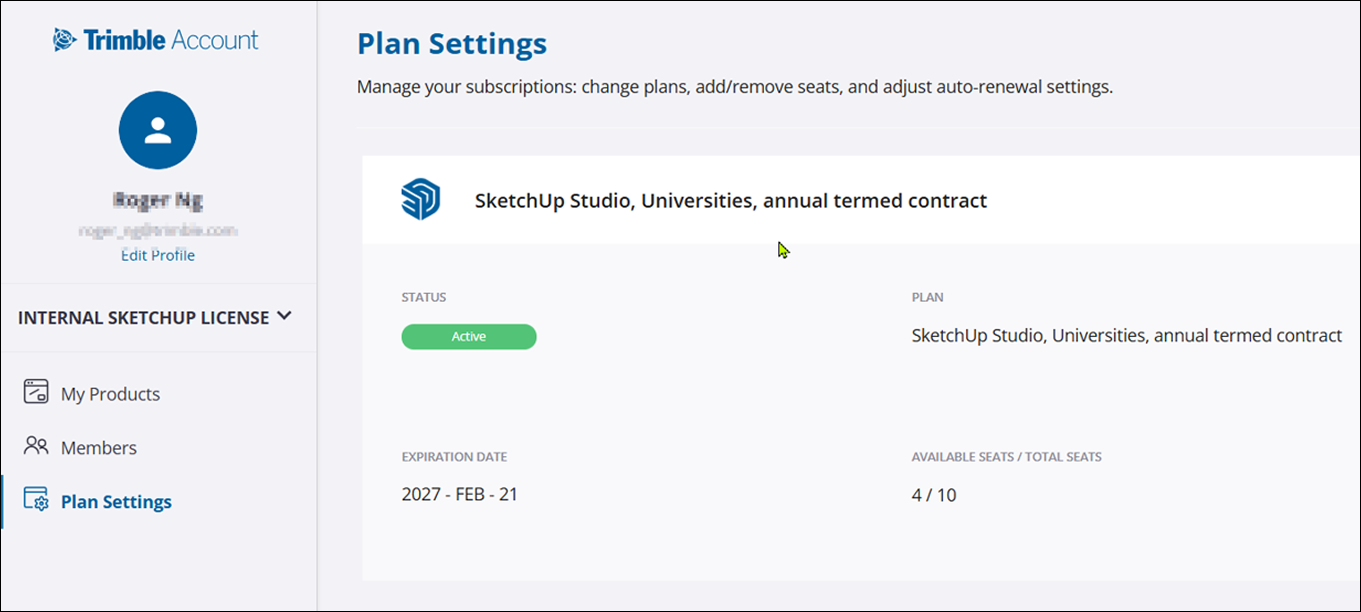
- A Prove of Valid SketchUp License ( One team required 1 license )
- Capture your AMP ( Account Management Portal ), with your email address written there / https://ecom-prd.trimblepaas.com/account/organization
-
Timeline
| Completion Announcement | : 27 April 2026 |
| Team Registration | : 27 April- 27 May 2026 |
| Online Briefing (SketchUp Ecosystem + Judges Q&A) | : 19 May 2026
Join our online briefing on 19 May 2026, if you have any questions for this competition. https://meet.google.com/jep-vzfr-ejt 10.30 am – 11.30 am ( GMT + 5.30 ) 12.00 am – 01.00 pm ( GMT + 7 ) 01.00 pm – 02.00 pm ( GMT + 8 ) 02.00 pm – 03.00 pm ( GMT + 9 ) 03.00 pm – 04.00 pm ( GMT +10 ) |
| Submission Deadline | : 19 July 2026 |
| Announcement of 8 Shortlist | : 17 August 2026 |
| Final Presentation | : 17 September 2026 |
| Winner Announcement | : 17 September 2026 |

Judging Criteria
| Criteria | Weight | Time |
|---|---|---|
| Cultural Understanding, Climate Response, & Design Argument | 30 % | How well does the team understand the existing building’s cultural context and climate performance? Is the design argument clear? Does the addition emerge logically from the existing structure? |
| Architectural Resolution | 30 % | Is the design resolved spatially, structurally, and programmatically? Is the relationship between old and new legible and inventive? Are back-of-house services considered alongside public spaces? |
| Maximising use of SketchUp for your Design | 40 % | How effectively are drawings, modelling, and visual communication used? Is the SketchUp model a genuine record of design thinking? Are drawings clear, accurate, and properly scaled? Use of SketchUp Features, Ecosystem and Extensions needs to be clearly communicated in each steps Refer to Link to this Presentation for Introduction to SketchUp Ecosystem and Link to New Features |
Prizes
- Top 8 Teams from Online Stage
- USD 1,000 per team + invitation to Bali for the final presentation ( air ticket round trip + accommodation room shared will be provided, include their mentor )
- Regional Winners ( Onsite Stage ) :
- 🏆 1st Place = USD 2,000 + Spacemouse 3D Connexion hardware
- 🏅2nd Place = USD1,500 + Spacemouse 3D Connexion hardware
- 🏅3rd Place = USD 1,000 + Spacemouse 3D Connexion hardware.
- Best Presentation Team = Spacemouse 3D Connexion Hardware
Frequently Asked Questions
Q: Is attention to interior design required, or should students focus only on the exteriors?
A: Detailed interior design is not a requirement. However, 2D plan and section drawings must be provided to illustrate the program allocations and layout of the interior space. While including interior design elements or showing interior qualities with renders is a bonus, it is not mandatory.
Q: Do students need to create an accurate digital drawing of the existing building?
A: No, the digital drawing of the existing building does not need to be accurate.
However, the extension must nicely complement the existing structure.
Q: Is there any size limitation?
A: No, However the students should select a site that they can manange within their capacity
Q: How I can learn more about SketchUp features, ecosystems and extensions ?
A: Refer to Link to this Presentation for Introduction to SketchUp Ecosystem and Link to New Features
Q: How should I upload my submission?
A: We will share a dedicated link for uploading your files, which should include your presentation, SketchUp model, and any other accompanying files.
Q: Should students use English during onsite Live Presentation
A: Students can present with their native language, however we request all document submissions include presentation deck in English
SketchUp
Ecosystems
-
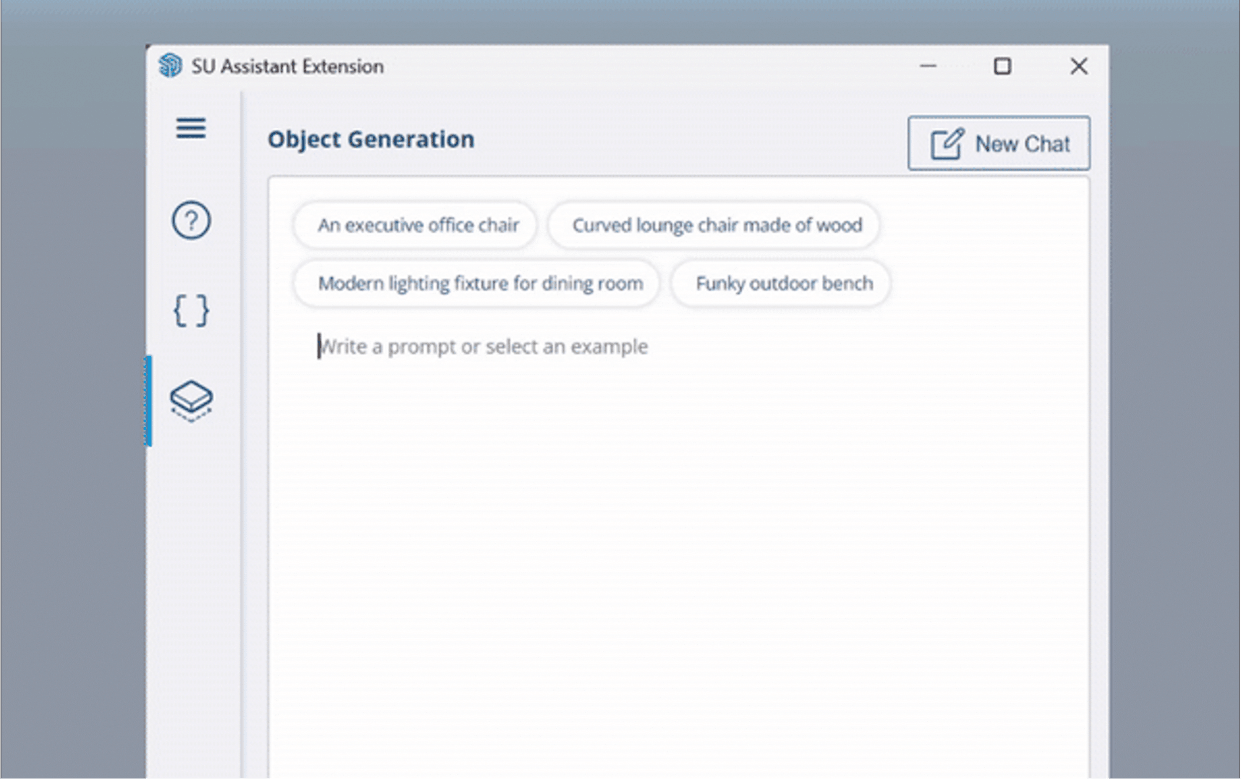
AI Object
Generation -
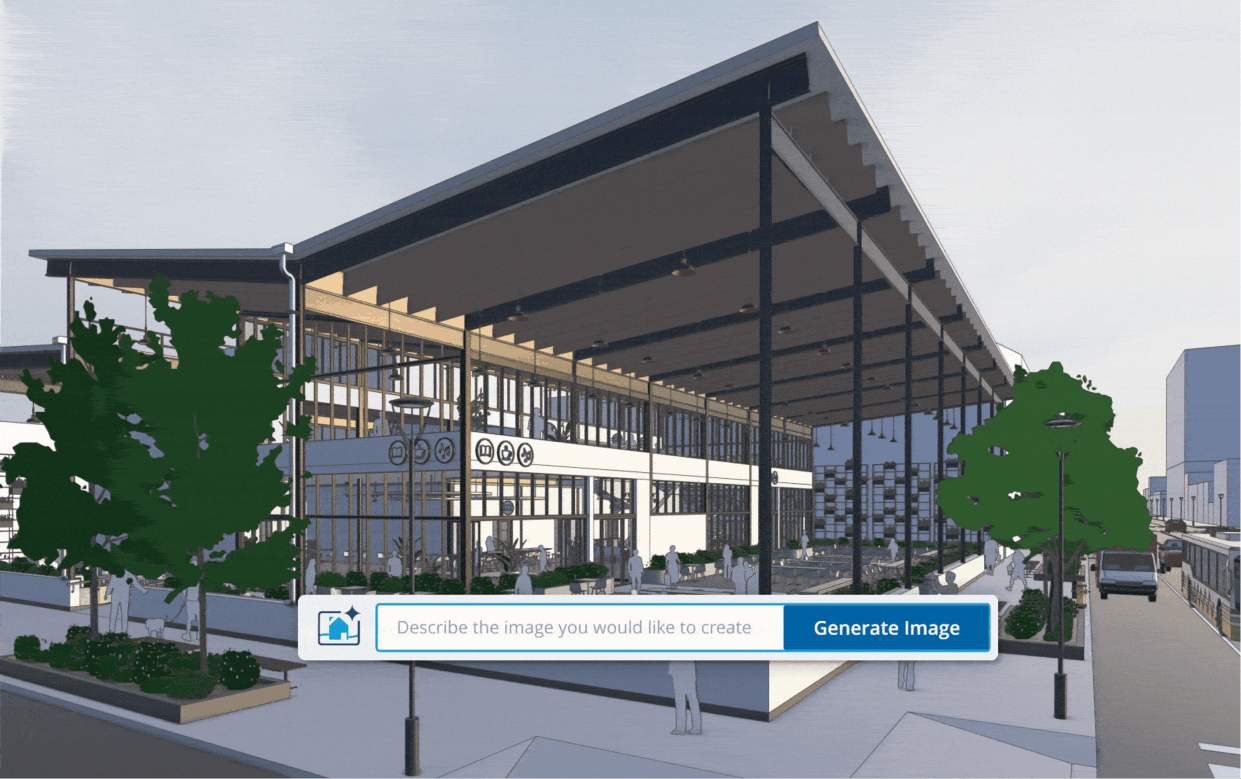
AI Render
-
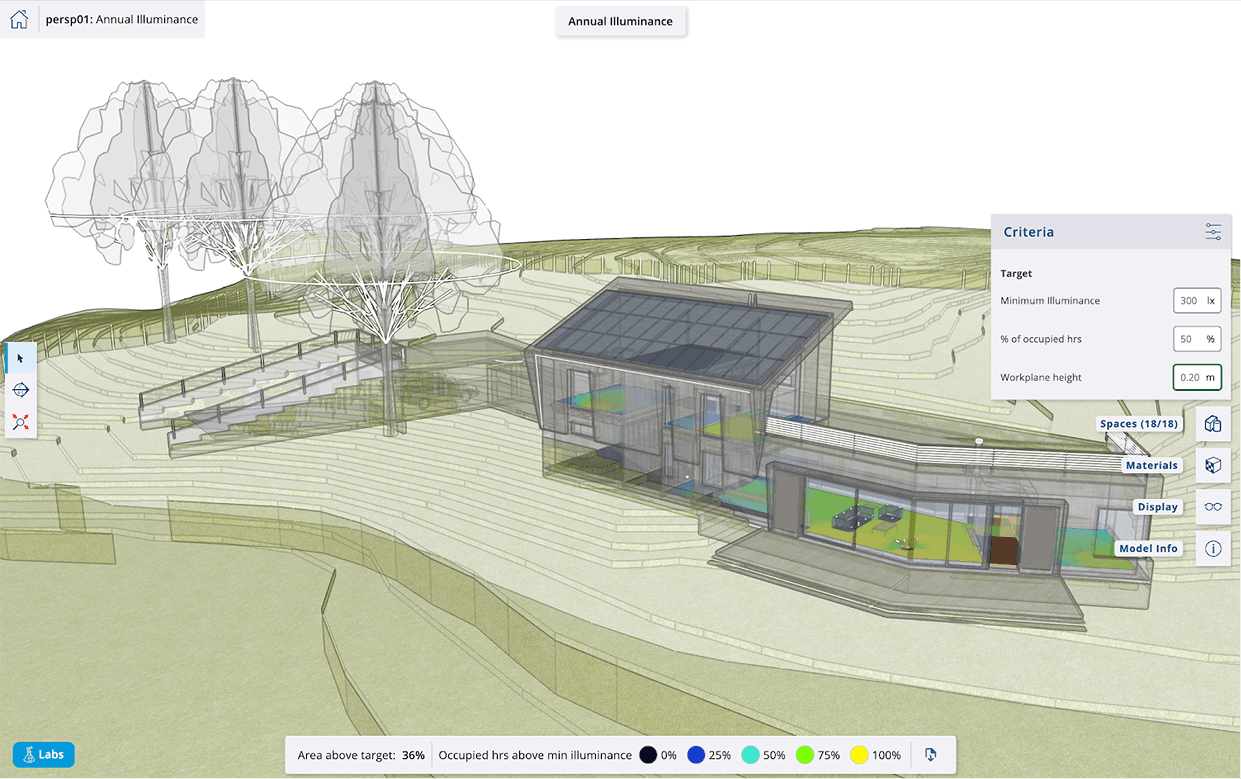
Daylight
Analysis -
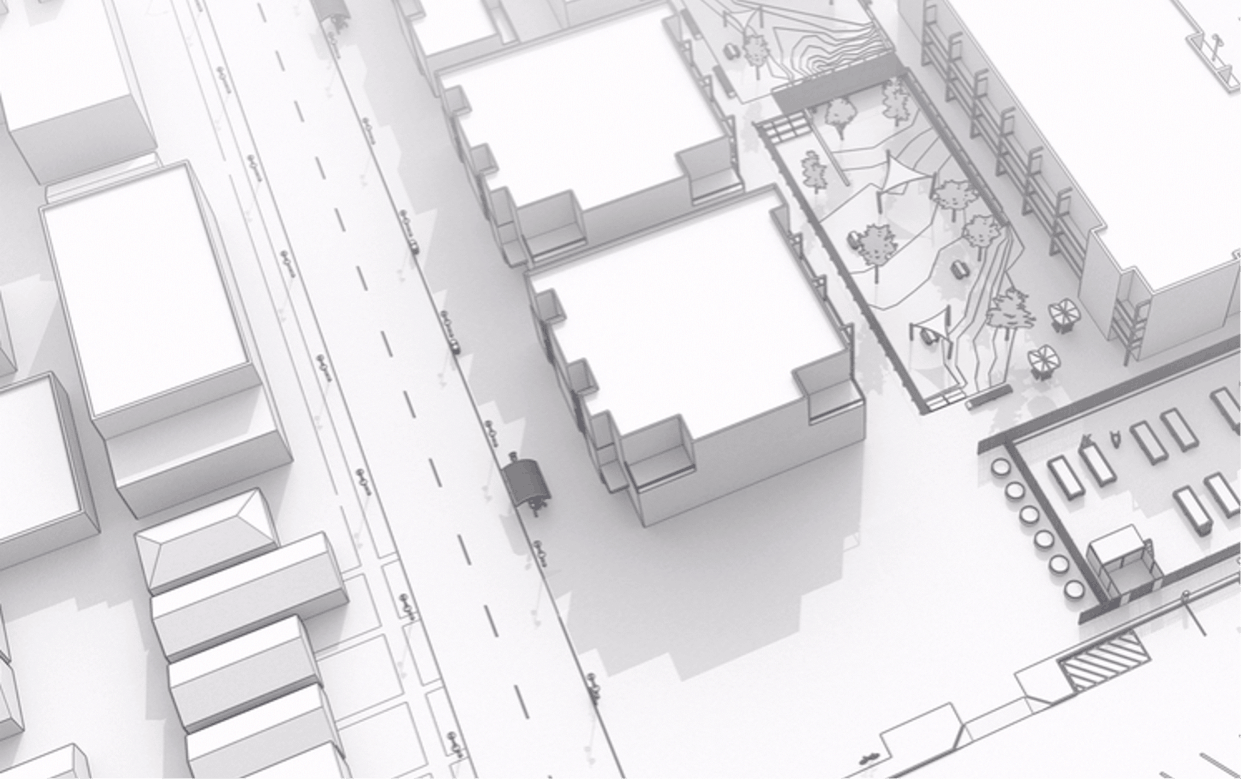
PreDesign
-
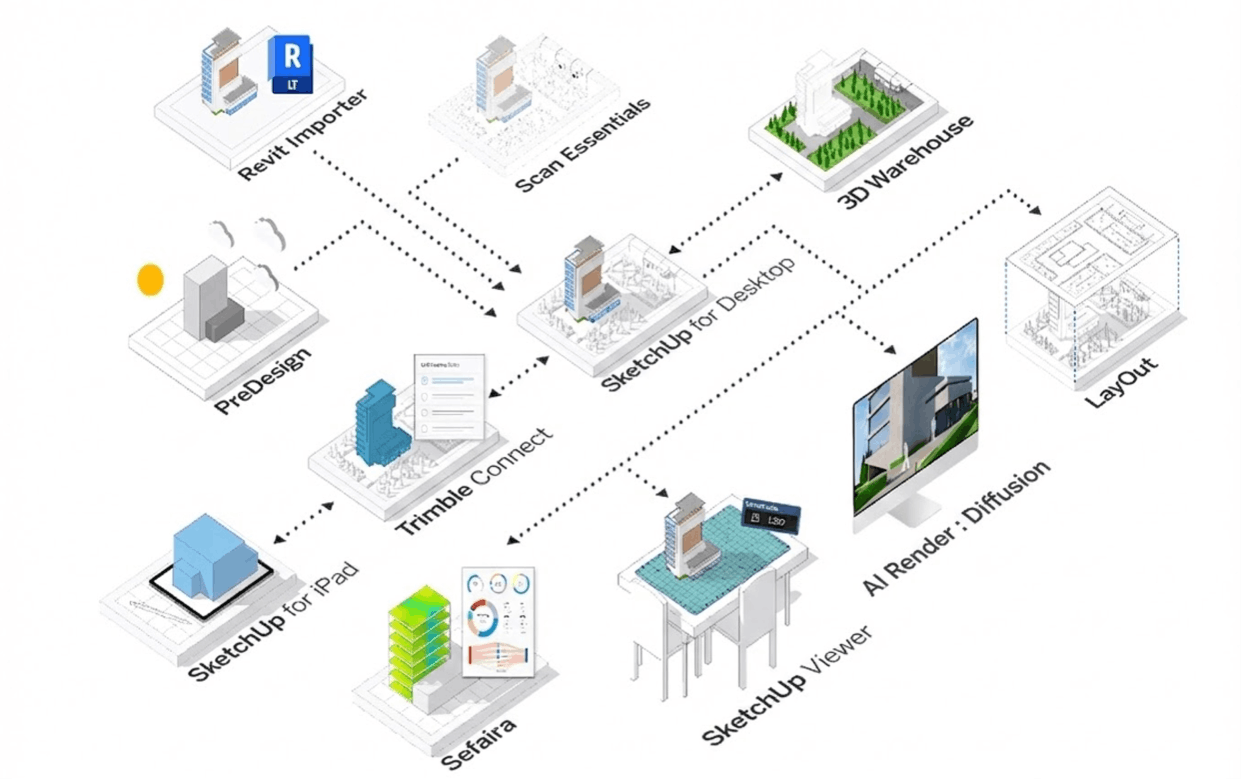
SketchUp
Ecosystems